Why San Francisco’s Fog, Salt Air, and Microclimates Demand Different Home Siding Than the Rest of California
Every exterior in San Francisco lives in a climate the rest of California does not face. Fog thickens along Ocean Beach for half the year. Salt rides the onshore wind through Sea Cliff and the Outer Richmond. Twin Peaks casts a literal rain shadow that warms and dries the Mission and Noe Valley. The Marina meets bay chop and tidal spray. A single siding specification cannot serve all of these exposures. Siding installation San Francisco must match the microclimate and the building type or the wall will fail early. That is the practical rule Best Exteriors uses on projects from the Outer Sunset to Pacific Heights.
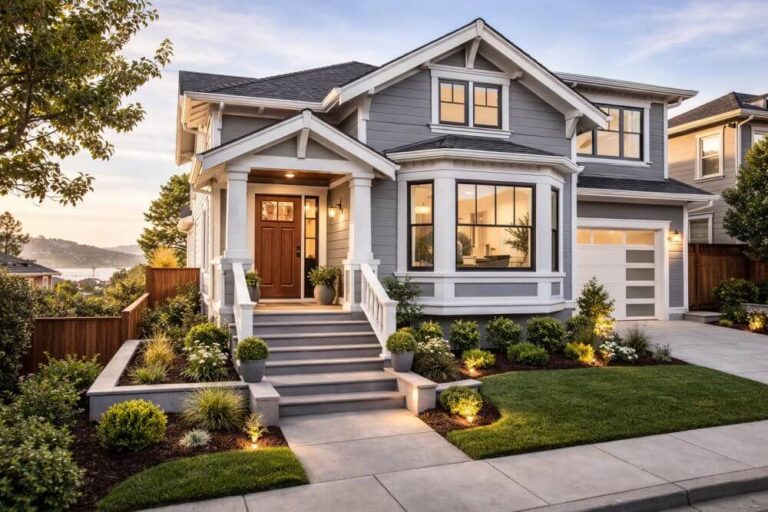
Why San Francisco Homes Need a Different Siding Installation Playbook
San Francisco’s housing stock centers on prewar wood-framed buildings with complex trim and mixed cladding. Victorian and Edwardian flats still carry original redwood and Douglas fir. Mid-century infill added stucco skins over plank or OSB sheathing. Contemporary infill along SoMa and Dogpatch brought modern rainscreen concepts into narrow lot lines. Every one of those walls responds differently to fog moisture, salt air, and daily temperature swings.
In 2026 the installation context changed again. The 2025 California Building Codes are now live citywide, and the Department of Building Inspection moved routine in-kind siding permits into the PermitSF online portal. Simple fiber cement in-kind installs in residential zip codes like 94122, 94116, 94118, and 94114 can now clear permit review in as little as two business days when the submittal is correct. Contractors who still route paper workflows through 49 South Van Ness Avenue insert avoidable downtime into a process that is now digital-first.
That speed only matters if the installed system meets the fog, salt, and wind that define San Francisco. Material selection is step one. Fastener class, flashing, weather barrier sequencing, and cut-edge treatment decide whether the wall system hits year ten without swelling, rot, or rust streaks. Poorly adapted out-of-town specifications are the main reason San Francisco homeowners see bubbling paint and warped siding by year four or five on west-facing walls.
What Fog, Salt Air, and Architecture Demand From New Siding
Installation intent drives the scope. On a new siding installation, the contractor specifies, fastens, flashes, and seals a complete exterior system to current code. Structural prep like OSB sheathing repair or dry rot treatment is part of the scope, not the reason for the project. For San Francisco that means a HardieZone 4 coastal fiber cement or a Grade-A cedar profile for historic work, integrated with a weather resistant barrier, window flashing, and corrosion-matched fasteners. Every cut edge receives field primer. Every butt joint receives Z-flashing. Sealants meet a UV and salt tolerance, and joints are tooled for full contact, not decorative beads.
Fiber cement tested under ASTM C1186 and C1325 holds its profile under wet conditions and resists fire. That matters in dense neighborhoods like the Richmond District and the Castro. James Hardie’s HardiePlank lap, HardiePanel vertical, and HardieShingle profiles in the HardieZone 4 coastal system handle the marine layer better than wood without giving up historic proportions. The Cedarmill texture lands near the shadow lines owners expect on Victorian bays along Steiner Street by Alamo Square. On contemporary SoMa infill, a Smooth Finish HardiePanel with express joints hits the design intent while keeping a noncombustible cladding per ASTM E136 and a Class A flame spread per ASTM E84.
Hardware drives long-term performance as much as the board. In the Fog Belt, stainless steel fasteners prevent galvanic corrosion and head staining that standard galvanized nails show in three to five years. Along the Marina waterfront and Dogpatch bay edge, marine-grade polyurethane sealant outlasts painter’s caulk by a factor homeowners actually see. In the Mission’s sun belt, hot-dip galvanized fasteners are acceptable, but nail-gun pressure still must be calibrated so heads sit flush without crushing the board face. Over-driven fasteners are a common cause of hairline cracks that telegraph through paint within the first year.
San Francisco-Specific Failure Patterns That New Installs Must Prevent
West-facing elevations in the Outer Sunset and Outer Richmond take daily wind-driven fog that forces water into laps and trim joints. Without a true drainage plane, moisture rides capillaries into OSB sheathing. The first sign is peeling paint and bubbling near butt joints. Next comes a soft spot that gives under finger pressure. A correct install places HardieWrap or an equivalent weather resistant barrier over intact sheathing, then integrates window flashing, kickout flashing at roof-to-wall, and Z-flashing at every horizontal joint. That combination interrupts the moisture path and gives water a way out.
Salt air stains also show up well before most owners expect. Electro-galvanized nails in 94122 and 94121 often show rust freckles within 24 to 36 months. Those freckles bleed down the face and create vertical streaks on light paint colors. Specifying 304 or 316 stainless steel fasteners in the Fog Belt eliminates that issue. It is a small cost shift that saves a repaint cycle and protects the warranty record.
On narrow-lot Victorians in Hayes Valley or Pacific Heights, complex trim and cornice returns create water traps. A new siding install must address trim backsides and install proper drip caps at horizontal features. Many paint failures in these districts are not about the siding board at all. They are about missed metalwork above the board line that lets water sit behind face-painted wood. A correct install packages siding and trim as one enclosure, not two separate scopes.
How San Francisco’s Fog Belt, Sun Belt, and Waterfront Zones Change the Specification
San Francisco has at least three practical exterior zones. Each needs different fasteners, sealants, and sometimes different profiles. This shift in specification is not a manufacturer policy. It is a response to air chemistry, wind exposure, and maintenance cycles that local crews see daily.
- Fog Belt: Outer Sunset, Outer Richmond, Sea Cliff, west of 19th Avenue. Expect 150 or more fog days per year and salt-laden moisture. Specify HardieZone 4 fiber cement over HardieWrap, 304 or 316 stainless steel fasteners, and marine-grade polyurethane sealant. Install Z-flashing at every butt joint and drip caps over horizontal trim. Field-prime and seal every cut edge. Sun Belt: Mission District, Potrero Hill, Bernal Heights, Noe Valley. Warmer and drier behind Twin Peaks, with strong afternoon sun. Hot-dip galvanized fasteners are acceptable. Watch thermal movement on lap siding. Maintain consistent reveal and drive nails flush without face fracture. UV-stable sealants prevent chalking along south and west faces. Waterfront: Marina District, Embarcadero, Dogpatch. Wind-driven bay moisture and a tidal salt cycle. Stainless steel fasteners and marine-grade polyurethane are mandatory. Integrate kickout flashing and a true drainage plane. Expect more inspection of flashing terminations around window heads and sills due to wind load.
The microclimate map even shifts street by street. Twin Peaks and Sutro Tower mark the weather break homeowners feel as they drive from the Inner Sunset into the Castro. A siding installation in 94116 can need stainless steel fasteners two blocks west of Sunset Boulevard and hot-dip galvanized two blocks east. Field crews build that judgment into the bid and the permit narrative so DBI sees a reasoned specification and not a template.
Shareable Local Fact: Corrosion Class by Microclimate
Across Outer Sunset and Sea Cliff site inspections between 2018 and 2025, head staining on electro-galvanized siding nails appeared within 36 months in nearly every case within six blocks of Ocean Beach. Fasteners labeled hot-dip galvanized extended that window, but stainless steel fasteners eliminated visible staining even on direct west faces through year five. That is why many San Francisco teams treat stainless as a baseline in the Fog Belt, even when a national guide would not.
Why James Hardie Elite Preferred Work Has Become the City Standard
James Hardie’s HardieZone 4 coastal system gives San Francisco homes a fiber cement profile that resists salt air and moisture without losing shape. HardiePlank lap siding provides the classic horizontal reveal seen across the Richmond and Sunset. HardiePanel vertical with batten strips fits mid-century and modern mixed-use along SoMa and Mission Bay. HardieShingle sets off Victorian gables in Alamo Square and Pacific Heights with the right texture scale. ColorPlus Technology factory finishes carry a 15-year fade warranty and stabilize color on foggy west faces where field-applied coatings struggle to cure between weather changes.
Elite Preferred status matters because warranty enforcement matters. Inspectors check fastener class, fastener placement, and face condition. They check HardieWrap installation sequence and flashing integration. They look for field-primed cut edges and Z-flashing at butt joints. Failure to meet those items voids parts of the warranty. An Elite Preferred installer writes the specification to meet the standard from the start so the City, the manufacturer, and the homeowner share the same set of expectations.
Fire performance is also a San Francisco concern. Fiber cement is noncombustible under ASTM E136 and carries a Class A flame spread index of 0 under ASTM E84. That performance is relevant in dense lots in the Mission and Bernal Heights and on shared-wall conditions found in older Edwardian rows. Many clients pair new siding with HardieSoffit and HardieTrim to complete a noncombustible cladding envelope from eave to grade.
Installation Markers That Separate Clean Work From Callbacks
Clean reveals and straight courses show craftsmanship, but performance depends on details behind the face. The drainage plane must be continuous. That means the weather resistant barrier laps shingle-style and wraps clean into window flashing. Starter strips must be level to set the first course. Butt joints need a small gap per the manufacturer to allow movement, protected by Z-flashing, and receive a tight caulk joint only where the profile calls for it. Nail depth must be flush. Over-driven fasteners create microfractures that admit moisture.
On HardiePanel vertical, expansion joints must align with stud layout and receive backer strips as specified. On HardieShingle, course offsets must be consistent to avoid repetitive patterns that trap water. At roof-to-wall junctions, kickout flashing prevents roof runoff from pouring into a siding corner. It is common to see rot lines in the first stud bay below a roof end where kickouts were omitted on prior remodels. A correct install closes that pathway permanently.
Victorians, Edwardians, Eichlers, and Marina-Style Homes: Matching Siding to Archetype
San Francisco architecture sets constraints that a correct install respects. Victorian and Edwardian streetscapes in Alamo Square, Pacific Heights, and the Haight-Ashbury carry ornate bays, cornices, and shingle accents that do not accept generic lap exposure widths. Many historic profiles run 4 to 4.5 inches on the face. James Hardie’s HardiePlank Cedarmill with a 4.5-inch reveal matches those lines and allows DBI to treat the project as in-kind where appropriate. Gables often get HardieShingle to retain the Queen Anne shingle presence while gaining a stable substrate that does not cup in fog.
Post-1906 Marina-style homes often mix stucco with wood accents. Where owners convert to full fiber cement, vertical HardiePanel with batten strips can echo original board-and-batten accents while improving the drainage plane. Eichler-influenced ranch homes in Diamond Heights and Miraloma Park tend to prefer smooth vertical or clean lap for modern lines. In SoMa and Dogpatch, HardiePanel Smooth with open-joint rainscreen detailing fits the industrial look while meeting noncombustible cladding goals near mixed-use lots.
- Painted Ladies and similar Queen Anne facades: 4.5-inch HardiePlank Cedarmill, HardieShingle at gables, AZEK or HardieTrim for cornice restoration, field-primed and flashed at every joint. Edwardian flats with bay windows: lap siding with tight reveal, careful window flashing integration, drip caps at bay head, kickout flashing where roofs die into side walls. Eichler and mid-century: Smooth Finish HardiePanel vertical with concealed fasteners, express joints where design calls for them, strong attention to thermal movement in sun belt areas. Marina and Richmond stucco conversions: fiber cement over new drainage plane using rainscreen furring where needed, stainless fasteners and marine-grade caulk near bay exposure. Contemporary SoMa mixed-use: noncombustible HardiePanel Smooth, Class 1A fire rating target, integrated WRB and air barrier continuity over steel or wood framing.
Permits, DBI, and 2026 Code Compliance Without Lost Weeks
San Francisco’s Department of Building Inspection requires permits for most siding installation work. As of February 13, 2026, PermitSF is the primary intake for digital applications. For in-kind fiber cement installs that match original exposure and profile, DBI often issues approvals in as little as two business days when the package includes elevations, a product spec sheet, and a simple scope narrative. Projects in historic districts such as Alamo Square, Liberty Hill, or Dolores Heights can trigger Planning review under the Preservation Design Standards adopted April 1, 2025. That layer adds three to eight weeks depending on the case queue and completeness of documentation.
The 2025 California Building Codes control the substrate, weather barrier, and flashing. Expect DBI to check the weather resistant barrier before the siding goes up. Expect inspectors to look closely at kickout flashing and head flashing above window and door openings. For buildings near the waterfront or ocean, corrosion-resistant fasteners are not a suggestion. They are a practical requirement to pass and to last. Field photo logs of the WRB and flashing steps help close inspections on time and protect the record for future resale questions.
Owners sometimes ask if going to the permit counter at 49 South Van Ness Avenue speeds anything up. In 2026, counter trips rarely help. The city shifted simple work into the online queue, and in-kind approvals move fastest when the submittal is clean in PermitSF. That is the process trajectory citywide as of this year.
A Permitting Fact Worth Sharing
In 2026, properly assembled in-kind fiber cement applications through PermitSF for residential addresses in 94122, 94116, and 94118 have cleared initial DBI review in as little as two business days. That speed depends on matching the original profile and providing cut-sheet documentation up front. Incomplete digital packets still stall for weeks. The difference is paperwork quality, not who stands at the permit counter.
Material Choices for San Francisco Installations
Fiber cement is the city’s workhorse because it is noncombustible and stable in fog. James Hardie HardieZone 4 formulations are engineered for coastal conditions and remain the most common exterior upgrade in the Sunset and Richmond District. CertainTeed fiber cement and LP SmartSide have project use cases, but most San Francisco owners select James Hardie for warranty, profile range, and fire performance. ColorPlus factory-applied finishes reduce repaint cycles and provide even coverage in variable coastal cure conditions.
Insulated vinyl siding, including premium lines such as Prodigy Insulated Vinyl, can work in the sun belt neighborhoods where heat and UV dominate and salt exposure is lower. It is not a common choice west of 19th Avenue or within direct salt corridors. Vinyl expands and contracts more than fiber cement during temperature swings, and salt air accelerates surface dulling near Ocean Beach and Baker Beach. If used, insulated vinyl must be installed with precise expansion gaps and accessory channels that match San Francisco’s daily thermal shifts and winter moisture.
Grade-A cedar shingles remain a valid choice for historic accents and full shingle facades where owners siding installers San Francisco want wood grain under clear finishes or solid stains. In the Fog Belt, cedar needs a disciplined back-priming routine, stainless steel ring-shank nails, and a true rainscreen gap to breathe. Without that, wood can cup or host surface algae in three to five seasons. Many historic homeowners choose a hybrid: fiber cement lap or panel for field walls and true cedar shingle accents above the cornice line or on small gable areas.
The Building Envelope: Sheathing, WRB, Flashing, and Fasteners
San Francisco homes often reveal hidden conditions once the old cladding comes off. OSB sheathing near roof-to-wall transitions may show discoloration or softness from years of fog moisture. A correct installation replaces compromised OSB sheathing, then installs a continuous weather resistant barrier such as HardieWrap. Sequencing matters. The WRB laps shingle-style, integrates with window flashing, and returns clean at penetrations.
Kickout flashing at roof-to-wall is a must. It takes roof runoff and throws it into the gutter instead of the siding corner. Z-flashing at butt joints turns a vulnerable horizontal seam into a protected break. Drip caps over horizontal trim and window heads stop water from crawling back into the casing. Stainless or hot-dip galvanized fasteners, selected by microclimate, hold the entire assembly in place without head corrosion.
In waterfront exposures, consider a ventilated rainscreen gap behind fiber cement with vertical furring strips to accelerate drying. This detail is increasingly popular in Dogpatch and the Marina where wind loads and intermittent spray test every sealant joint. It does add thickness at trim returns, which must be accounted for in the design so the facade lines remain clean.
Energy Sealing and Title 24 Adjacent Work
While siding itself is not a Title 24 window or HVAC trigger, a new siding installation is the moment to address air sealing around window and door perimeters. In San Francisco’s climate, that simple step reduces drafts in foggy zones and heat loss in windy corridors like the Embarcadero and Russian Hill. Where owners plan to replace windows in the same project, a Certified Anlin Dealer installation integrates window flashing and siding sequencing to meet Title 24 energy sealing and DBI inspection expectations in one pass.
Neighborhood Focus: Outer Sunset, Richmond, Mission, Noe Valley, and the Marina
Outer Sunset and Outer Richmond: 94122 and 94121 sit in the Fog Belt. Homes see 150 or more fog days per year. Stainless steel fasteners are standard. Marine-grade sealants protect joints. HardiePlank Cedarmill with a 4.5-inch reveal reads historically correct and holds shape. Expect inspectors to look closely at WRB laps and Z-flashing at butt joints because moisture pathways are common in these districts.
Inner Sunset and Richmond District: 94116 and 94118 get slightly less fog than the outer avenues but still need a corrosion-resistant specification on west and north faces. Proper drip caps over horizontal trim and careful window flashing keep bay wind from pushing water into the wall. Many homes here keep wood trim and move to fiber cement field boards, a solid balance of tradition and performance.
Mission District, Bernal Heights, Potrero Hill, and Noe Valley: 94110 and 94107 sit in the sun belt. UV exposure and heat drive movement. Hot-dip galvanized fasteners work. Nail flushness and consistent reveal matter more than corrosion class. Smooth Finish HardiePanel with vertical battens or lap in longer exposures are common selections. On Bernal’s hill faces, wind uplift can be strong, so pay attention to fastener spacing patterns.
Marina and Dogpatch Waterfront: 94123 and the bay edge of 94107 meet wind-driven moisture and a tidal salt cycle that tests every joint. Stainless steel fasteners and marine-grade polyurethane caulk are baseline. A ventilated rainscreen behind fiber cement helps the wall dry between winter storms. Inspectors here often check flashing terminations and corner details due to wind load.
Cost and Value in the 2026 San Francisco Market
Installed costs in San Francisco run higher than regional averages due to labor markets, scaffolding needs on narrow lots, and trim complexity on historic homes. In 2026, many projects land between $7 and $20 per square foot installed depending on material, microclimate specification, and trim scope. Smaller elevation-only installs can start near $5,600. Full Victorian replacements with bay windows, multi-profile trim, and cornice work often run $25,000 to $55,000. Those ranges assume a correct permit path through PermitSF and typical DBI inspection sequences.
Resale data trends show fiber cement returning 80 to 95 percent of its cost on resale in dense urban markets where curb appeal and maintenance signaling carry weight. In San Francisco, buyers recognize ColorPlus factory finishes, straight reveals, and clean trim lines as signals of recent investment. A clean PermitSF record and a named product warranty reinforce that signal during disclosures.
Installation Logistics on Tight San Francisco Lots
Scaffolding and staging drive schedule on narrow lots in the Castro, Glen Park, and Noe Valley. Crews must protect neighboring properties and coordinate with shared driveways and sidewalks. Many jobs require early deliveries and off-street material staging plans. Dogpatch and SoMa mixed-use blocks add commercial loading constraints. These constraints change nothing about the specification. They do influence calendar planning and crew size so the exterior stays open for the shortest practical time between WRB inspection and final siding courses.
Zero-lot-line conditions also increase the need for photo documentation of flashing and WRB steps before concealment. DBI appreciates clean photo logs with date stamps when visibility is tight on final inspection walks. Owners appreciate that record on resale and insurance updates.
What To Watch On Your Elevations After a New Install
New siding should lie flat, carry even reveals, and keep joints tight and clean. In the first rainy season, watch corners at roof-to-wall kickouts on the windward side for any surface staining. That is usually a gutter or roofing issue, not a siding issue, but it shows where water focuses on the facade. Along the bay, inspect marine-grade caulk beads annually. They should remain elastic and bonded to both faces. Field-applied paint on trim will age faster along Ocean Beach and Baker Beach exposures than factory ColorPlus on boards. Plan repaint intervals accordingly.
Local Landmarks and Project Context
From Coit Tower and the Financial District high-rises down to Fort Mason and Fisherman’s Wharf, the variety of exposures is clear. Best Exteriors serves San Francisco from 50 California Street, Suite 1500, in the 94111 zip code, close to the Ferry Building and the Embarcadero. Crews move daily between Golden Gate Park, Twin Peaks, and Dolores Park. That range is the backdrop for the specification differences in this article. It is common to install stainless fasteners on a Sea Cliff project on Monday, then hot-dip galvanized in Noe Valley on Tuesday, with a different weather barrier sequencing nuance tied to each facade’s openings and trim.
Standards, Codes, and Warranty Points Owners Should Expect
Correct fiber cement products carry testing under ASTM C1186 and C1325. Noncombustibility aligns with ASTM E136 and flame spread with ASTM E84. San Francisco projects reference the 2025 California Building Codes. DBI expects PermitSF applications that match scope type, clean WRB sequencing, and visible flashing at inspections. James Hardie’s product warranty is 30 years on many boards, and ColorPlus carries a 15-year fade warranty. A Double Lifetime Warranty on installation protects against workmanship issues when the work follows manufacturer specifications and the microclimate adjustments documented above.
Why This Discussion Matters in Real Numbers
On west-facing Outer Sunset homes within six blocks of Ocean Beach, stainless fasteners prevent the rust-head streaking that commonly appears on standard galvanized nails by year three. On Marina waterfront addresses, marine-grade polyurethane sealant at vertical trim joints has shown service life two to three times longer than painter’s acrylic under the same sun and salt cycle. On the permit side, correct PermitSF in-kind packets have closed in two business days for routine fiber cement installs in 94122, 94116, and 94118. Those three facts change cost of ownership and schedule more than any style choice.
Service Area and Local Proof
Best Exteriors installs siding across San Francisco County and the Bay Area. Projects run weekly in the Outer Sunset and Inner Sunset, the Richmond District, Haight-Ashbury, the Castro, Noe Valley, Bernal Heights, Glen Park, the Mission, Potrero Hill, Pacific Heights, Russian Hill, Nob Hill, Twin Peaks, Diamond Heights, the Excelsior, Visitacion Valley, Portola, SoMa, Dogpatch, the Financial District, Alamo Square, Hayes Valley, the Marina District, and Sea Cliff. Crews also cross into Daly City, South San Francisco, the Peninsula, Marin County, and the East Bay as schedules require.
The company’s office stands at 50 California St #1500, San Francisco, CA 94111. That location places teams near PermitSF coordination, DBI communications, and city logistics. It also keeps site supervisors in quick reach of Ocean siding installation San Francisco Beach, Golden Gate Park, and Twin Peaks for same-day weather reads that change installation timing on open walls.
Why San Francisco Homeowners Choose Best Exteriors for Siding Installation
Homeowners who plan a new install want the right specification and a clean record with the City. They also want crews who understand why fastener class, Z-flashing, and cut-edge priming are not optional in the Fog Belt. Best Exteriors brings that judgment to each facade, writes the microclimate into the permit narrative, and delivers siding systems that meet the 2025 California Building Codes and 2026 DBI processes without delay.
Request an Install Assessment
Best Exteriors provides siding installation San Francisco across zip codes 94122, 94116, 94118, 94117, 94114, 94131, 94110, 94109, 94107, 94123, and 94124. The team specifies HardieZone 4 fiber cement, stainless or hot-dip galvanized fasteners matched to microclimate, HardieWrap or equivalent WRB, and full flashing integration. PermitSF submission, DBI coordination, and inspection scheduling are included with every project. CSLB Licensed and Insured, License #923505. James Hardie Elite Preferred Contractor. Diamond Certified. BBB Accredited A+. NARI Member. EPA Lead-Safe Certified. Double Lifetime Warranty on all siding installations. Free in-home or virtual consultation. 2026 code-compliance guarantee. Call the San Francisco line at +1-415-650-0634 or visit https://bestexteriors.com to schedule. Service area includes San Francisco, Daly City, South San Francisco, the Peninsula, Marin County, and the East Bay.